| THE HANDSTAND | FEB.-MARCH2011 |
The Doomsday Project, Deep Events, and the Shrinking of American Democracy
by Prof Peter Dale Scott
Asia-Pacific Journal Vol 9, Issue 4 No 2, January 24, 2011.
I know the capacity that is there to make tyranny total in America, and we must see to it that this agency [the National Security Agency] and all agencies that possess this technology operate within the law and under proper supervision, so that we never cross over that abyss. That is the abyss from which there is no return."-- Senator Frank Church (1975)
In recent years I have become more and more concerned with the interactions between three important and alarming trends in recent American history. The first is America’s increasing militarization, and above all its inclination, even obsession, to involve itself in needless and pernicious wars. The second, closely related, is the progressive shrinking of public politics and the rule of law as they are subordinated, even domestically, to the requirements of covert U.S. operations abroad.
The third, also closely related, is the important and increasingly deleterious impact on American history and the global extension of American power, of what I have called deep events. These events, like the JFK assassination, the Watergate break-in, or 9/11, which repeatedly involve law-breaking or violence, are mysterious to begin with, are embedded in ongoing covert processes, have consequences that enlarge covert government, and are subsequently covered up by systematic falsifications in media and internal government records.
One factor linking Dallas, Watergate, and 9/11, has been the involvement in all three deep events of personnel involved in America’s highest-level emergency planning, known since the 1980s as Continuity of Government (COG) planning, or more colloquially as “the Doomsday Project.” The implementation of COG plans on 9/11, or what I call Doomsday Power, was the culmination of three decades of such planning, and has resulted in the permanent militarization of the domestic United States, and the imposition at home of institutions and processes designed for domination abroad.
Writing about these deep events as they occurred over the decades, I have been interested in the interrelations among them. It is now possible to show how each was related both to those preceding it, and those which followed.
I would like in this essay to go further and propose a framework to analyze the on-going forces underlying all of the most important deep events, and how they have contributed to the political ascendance of what used to be called the military-industrial complex. I hope to describe certain impersonal governing laws that determine the socio-dynamics of all large-scale societies (often called empires) that deploy their surplus of power to expand beyond their own borders and force their will on other peoples. This process of expansion generates predictable trends of behavior in the institutions of all such societies, and also in the individuals competing for advancement in those institutions. In America it has converted the military-industrial complex from a threat at the margins of the established civil order, to a pervasive force dominating that order.
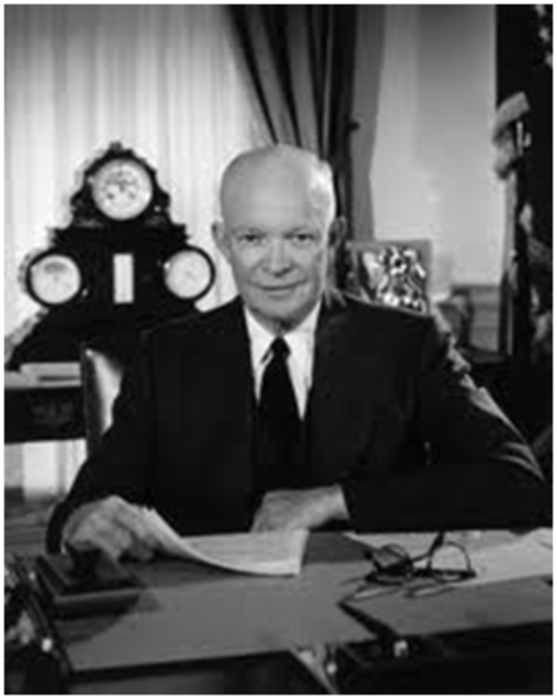
President Eisenhower in his farewell address in 1961 warned that “We must guard against the unwarranted influence, whether sought or unsought, by the Military Industrial Complex.”
With this framework I hope to persuade readers that in some respects our recent history is simpler than it appears on the surface and in the media. Our society, by its very economic successes and consequent expansion, has been breeding impersonal forces both outside and within itself that are changing it from a bottom-up elective democracy into a top-down empire. And among these forces are those that produce deep events.
I am far from alone in seeing this degradation of America’s policies and political processes. A similar pattern, reflecting the degradation of earlier empires, was described at length by the late Chalmers Johnson:
The evidence is building up that in the decade following the end of the Cold War, the United States largely abandoned a reliance on diplomacy, economic aid, international law, and multilateral institutions in carrying out its foreign policies and resorted much of the time to bluster, military force, and financial manipulation.
But my analysis goes beyond that of Johnson, Kevin Phillips, Andrew Bacevich, and other analysts, in proposing that three major deep events – Dallas, Watergate, and 9/11 – were not just part of this degradation of American democracy, but played a significant role in shaping it.
As author Michael Lind has observed, there have for a long time been two prevailing and different political cultures in America, underlying political differences in the American public, and even dividing different sectors of the American government. One culture is predominantly egalitarian and democratic, working for the legal consolidation of human rights both at home and abroad. The other, less recognized but with deep historical roots, prioritizes and teaches the use of repressive violence against both domestic and Third World populations to maintain "order."
To some extent these two mindsets are found in all societies. They correspond to two opposing modes of power and governance that were defined by Hannah Arendt as “persuasion through arguments” versus “coercion by force.” Arendt, following Thucydides, traced these to the common Greek way of handling domestic affairs, which was persuasion (pe??e??) as well as the common way of handling foreign affairs, which was force and violence (ß?a)."
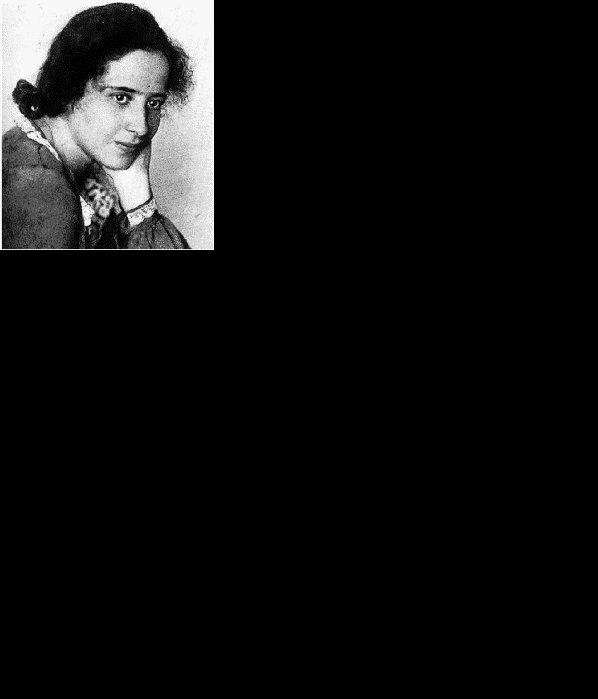
Hannah Arendt
Writing amid the protests and riots of the 1960s, Arendt feared that traditional authority was at risk, threatened (in her eyes) by the contemporary “loss of tradition and of religion.” A half century later, I would argue that a far greater danger to social equilibrium comes now from those on the right who invoke authority in the name of tradition and religion. With America’s huge expansion into the enterprise of covertly dominating and exploiting the rest of the world, the open processes of persuasion, which have been America’s traditional ideal for handling domestic affairs, have increasingly tilted towards top-down violence.
This tilt towards violent or repressive power is defended rhetorically as a means to preserve social stability, but in fact it threatens it. As Kevin Phillips and others have demonstrated, empires built on violent or repressive power tend to rise and then fall, often with surprising rapidity. Underlying the discussion in this essay is the thesis that repressive power is unstable, creating dialectical forces both within and outside its system. Externally, repressive power helps create its own enemies, as happened with Britain (in India), France (in Indochina) and the Netherlands (in Indonesia).
The Socio-dynamics of Repressive Power in Large-scale Societies
But more dangerous and destabilizing has been the conversion of those empires themselves, into hubristic mechanisms of war. The fall of Periclean Athens, which inspired Thucydides’ reflections, is a case in point. Thucydides described how Athens was undone by the overreaching greed (pleonexia) of its unnecessary Sicilian expedition, a folly presaging America’s follies in Vietnam and Iraq. Thucydides attributed the rise of this folly in the rapid change in Athens after the death of Pericles, and in particular to the rise of a rapacious oligarchy. Paul Kennedy, Kevin Phillips, and Chalmers Johnson have described the recreation of this process in the Roman, Spanish, Portuguese, Dutch, and British empires. Its recurrence again in recent American history corroborates that there is a self-propelling dynamic of power that becomes repressive.
It is useful to be reminded of the historical division between two cultures in America, which both underlay and predated the Civil War. But these two cultures have evolved and been reinforced by many factors. For example urbanization in America’s South and West worked for most of the 20th century to meld the two cultures, but after about 1980 the increasing disparity of wealth in America tended to separate them to an extent recalling the Gilded Age of the 19th century.
More importantly, postwar U.S. history has seen the institutions of domestic self-government steadily displaced by an array of new institutions, like the CIA and Pentagon, adapted first to the repressive dominance and control of foreign populations abroad, and now increasingly dominant domestically. The manipulative ethos of this repressive bureaucracy promotes and corrupts those who, in order to be promoted, internalize the culture of repressive dominance into a mindset.
The egalitarian mindset is widely shared among Americans. But Washington today is securely in the hands of the global repressive dominance mindset, and a deepening of the military-industrial complex into what in my most recent book I call the American war machine. This transformation of America represents a major change in our society. When Eisenhower warned against the military-industrial complex in 1961 it was still a minority element in our political economy. Today it finances and dominates both parties, and indeed is now also financing threats to both parties from the right, as well as dominating our international policy. As a result, liberal Republicans are as scarce in the Republican Party today as Goldwater Republicans were scarce in that party back in 1960.
That change has been achieved partly by money, but partly as a result of deep events like the JFK assassination, the Watergate break-in, and 9/11. As a rule, each of these deep events is attributed by our government and media to marginal outsiders, like Lee Harvey Oswald, or the nineteen alleged plane hijackers.
I have long been skeptical of these “lone nut” explanations, but recently my skepticism has advanced to another level. My research over four decades points to the conclusion that each of these deep events
1) was carried out, at least in part, by individuals in and out of government who shared and sought to promote this repressive mindset;
2) enhanced the power of the repressive mindset within the U.S. government;
3) formed another stage in a continuous narrative whose result has been a transformation of America, into a social system dominated from above, rather than governed from below.
Please note that I am talking about the result of this continuous narrative, not about its purpose. In saying that these deep events have contributed collectively to a major change in American society, I am not attributing them all to a single manipulative “secret team.” Rather I see them as flowing from the workings of repressive power itself, which (as history has shown many times) transforms both societies with surplus power and also the individuals exercising that surplus power.
We are conditioned to think that the open institutions of American governance could not possibly provide a milieu for plots like 9/11 against public order. But since World War Two covert U.S. agencies like the CIA have helped create an alternative world where power is exercised with minimal oversight, often at odds with public agencies’ proclaimed policy objectives of law and order, and often in conjunction with lawless and even criminal foreign and domestic elements.
The expansion of this covert world has occurred principally in Asia. There covert U.S. decisions were made to build up drug-financed armies in Burma, Thailand, and Laos, in a series of aggressive actions that by the 1960s involved America in a hot Indochina War. This war, like the related wars that ensued later in Kuwait, Iraq, and Afghanistan, was initiated by America for a mix of geostrategic and economic reasons, above all the desire to establish a dominant U.S. presence an important region of petroleum reserves.
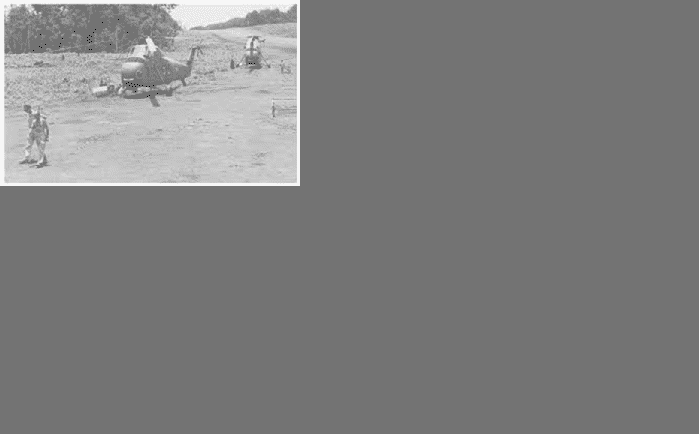
Air America at Sam Thong, Laos, 1961
The country most deeply affected by the succession of Asian Wars has been America itself. Its expansive forces, backed by powerful interest groups, are now out of control, as our managers, like other empire managers before them, have “come to believe that there is nowhere within their domain – in our case, nowhere on earth – in which their presence is not crucial.”7
To illustrate this, loss of control, let us look for a moment at a milieu which I believe to have been an important factor in all of America’s major domestic deep events: the CIA’s ongoing interactions with the global drug connection.
Unaccountable Power: The CIA and the Return of the Global Drug Connection
Since World War Two the CIA has made systematic use of drug trafficking forces to increase its covert influence -- first in Thailand and Burma, then in Laos and Vietnam, and most recently in Afghanistan.8 With America’s expansion overseas, we have seen more and more covert programs and agencies, all using drug traffickers to different and opposing ends.
In 2004 Time and USA Today ran major stories about two of the chief Afghan drug traffickers, Haji Juma Khan and Haji Bashir Noorzai, alleging that each was supporting al-Qaeda, and that Khan in particular “has helped al-Qaeda establish a smuggling network that is peddling Afghan heroin to buyers across the Middle East, Asia and Europe.”9 Later it was revealed that both traffickers were simultaneously CIA assets, and that Khan in particular was “paid a large amount of cash by the United States,” even while he was reportedly helping al-Qaeda to establish smuggling networks.10
There is no longer anything surprising in the news that large U.S. payments were made to a drug trafficker who was himself funding the Taliban and al-Qaeda. The arrangement is no more bizarre than the CIA’s performance during the U.S. “war on drugs” in Venezuela in the 1990s, when the CIA first set up an anti-drug unit in Venezuela, and then helped its chief, Gen. Ramon Guillén Davila, smuggle at least one ton of pure cocaine into Miami International Airport.11
It would be easy to conclude from these reports that the CIA and Pentagon intentionally use drugs to help finance the enemy networks that justify their overseas operations. Yet I doubt that such a cynical Machiavellian objective is ever consciously voiced by those responsible in Washington.
More likely, it is an inevitable consequence of the U.S. repressive style of conducting covert operations. Great emphasis is put on recruiting covert assets; and in unstable areas with weak governance, drug traffickers with their own ample funds and repressive networks are the most obvious candidates for recruitment by the CIA. The traffickers in turn are happy to become U.S. assets, because this status affords them at least a temporary immunity from U.S. prosecution.12
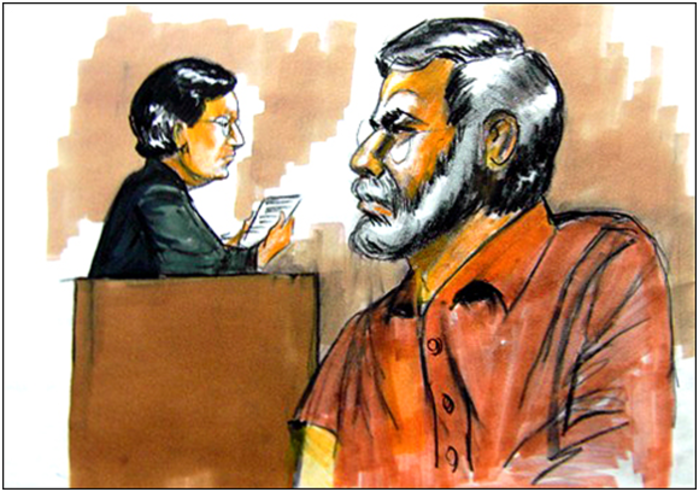
In a nutshell: I am describing a development that is not so much intentional, as a consequence of repressive dynamics. A related example would be the CIA’s recurring use of double agents, again for the reason just suggested. In the 1998 bombing of the U.S. Embassy in Kenya, the chief planner was a double agent, Ali Mohammed, who surveyed the Embassy and reported to Osama bin Laden in 1993, just months after the FBI had ordered the Canadian RCMP to release him from detention.13 In the Mumbai terrorist attack of 2008, the scene was initially surveyed for the attackers by a DEA double agent, David Headley (alias Daood Sayed Gilani) whom “U.S. authorities sent … to work for them in Pakistan…despite a warning that he sympathized with radical Islamic groups.”14
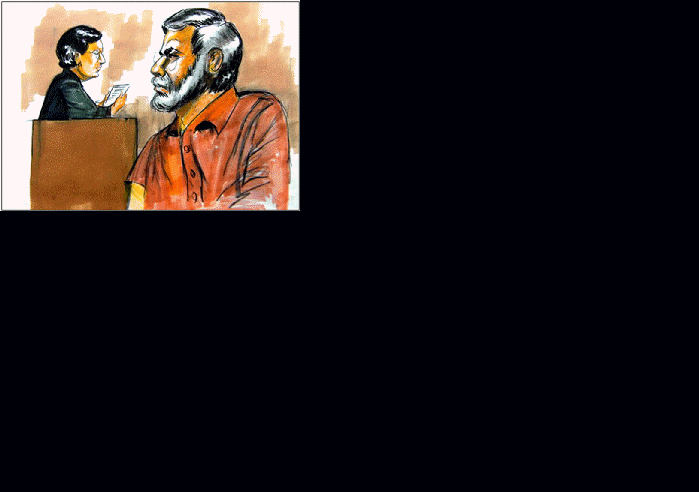
David Headley in court
The central point is that expansion beyond a nation’s borders engenders a pattern of repressive power with predictable results -- results that transcend the conscious intentions of anyone within that repressive power system. Newly formed and ill-supervised agencies spawn contradictory policies abroad, the net effect of which is usually both expansive and deleterious – not just to the targeted nation but also to America.
This is especially true of covert agencies, whose practice of secrecy means that controversial policies proliferate without either coordination or review. Asia in particular has been since 1945 the chief area where the CIA has ignored or overridden the policy directives of the State Department. As I document in American War Machine, CIA interventions in Asia, especially those that escalated into the Laotian, Vietnam, and Afghan wars, fostered an ongoing global CIA drug connection, or what I have called elsewhere a dark quadrant of unaccountable power.
This drug connection, richly endowed with huge resources and its own resources of illegal violence, has a major stake in both American interventions and above all unwinnable wars to aggravate the conditions of regional lawlessness that are needed for drug trafficking. Thus it makes perfect sense that the global drug connection has, as I believe, been an ongoing factor in the creation of an overseas American empire that most U.S. citizens never asked for. More specifically, the dark quadrant has contributed to all the major deep events – including Dallas, Watergate, and 9/11, that have helped militarize America and overshadow its public institutions.
Doomsday Power and the Military Occupation of America
I have said that, underlying the surface of America’s major deep events, there has been a pattern of conflict between two mindsets – that of openness and that of repressive dominance – dating back to the Civil War and the Indian wars of the mid-nineteenth century (and before that to the American Revolution).15 But it would be wrong to conclude from this on-going pattern of conflict that there is nothing new in our current situation. On the contrary, America is in the midst of a new crisis arising from this very old antagonism.
Since World War Two, secrecy has been used to accumulate new covert bureaucratic powers under the guise of emergency planning for disasters, planning known inside and outside the government as the “Doomsday Project.” Known more recently (and misleadingly) as “Continuity of Government” (COG) planning, the Doomsday Project, under the guiding hands in the 1980s of Oliver North, Donald Rumsfeld, Dick Cheney, and others, became the vehicle on 9/11 for a significant change of government. This package of extreme repressive power accumulated under the guise of the Doomsday Project can be referred to as Doomsday Power. In concrete terms, the repressive power developed to control the rest of the world is now, to an unprecedented extent, treating America itself as an occupied territory.
What I mean by “doomsday power” is the package of repressive mechanisms (which I have discussed elsewhere under their official name of “continuity of government” or COG plans), that was prepared over two decades by the elite COG planning group, and then implemented beginning on 9/11. The package includes 1) warrantless surveillance, 2) warrantless detention, (including unprecedented abridgments of the right to habeas corpus), and 3) unprecedented steps towards the militarization of domestic security enforcement and shrinking of the posse comitatus acts.
One recent development of Doomsday power, for example, has been the deployment since 2008 of a U.S. Army Brigade Combat Team to be stationed permanently in the United States. A major part of its dedicated assignment is to be "called upon to help with civil unrest and crowd control.”16 Many people seem to be unaware that Americans, together with this Brigade, have lived since 2002 under a U.S. Army Command called NORTHCOM.17 Yet if nothing is done to change the present course of events, historians may come some day to compare the stationing of this brigade in 2008 CE to the date, in 49 BCE, when Caesar, along with his legion, crossed the Rubicon.
And I believe that the forces that have worked for decades to create Doomsday power have, like the global drug connection, been involved in every one of the deep events, from Dallas to 9/11, that have helped bring us here.
Peter Dale Scott, a former Canadian diplomat and English Professor at the University of California, Berkeley, is the author of Drugs Oil and War, The Road to 9/11, The War Conspiracy: JFK, 9/11, and the Deep Politics of War. His most recent book is American War Machine: Deep Politics, the CIA Global Drug Connection and the Road to Afghanistan. Peter Dale Scott is a Research Associate of the Centre for Research on Globalization (CRG).