| THE HANDSTAND | MARCH2011 |
International Solidarity Movement and their ExperiencesGilad Atzmon: In the last month I circulated some invaluable reports by Vera Macht, an ISM (International Solidarity Movement) activist operating in Gaza.
My friend Gabi Weber decided to launch an urgent appeal for Vera Macht and ISM in Gaza.
Gabi writes, “These young activists who work with the ISM in Gaza, do it on a voluntary basis. They do not earn a single penny. In fact most of their activity is financed by themselves. At the moment there is no money left for urgent medical treatment.
The work of these young ISM activists is admirable and should be supported by every humanist. Day by day they witness horrific crimes committed by the Israeli army. The least we can do, is help them financially.
In the following you’ll find data from Vera´s bank account in Germany. We decided to collect all the money on this account and then transfer it to Gaza. This will be less expensive.
Jazza production also lends its paypal account for the cause. In the next month (until March 15th 2011) money that will be channeled to Jazza Production’s Paypal will be sent to Vera Macht and the ISM in Gaza.
Please spread this appeal widely, so we’ll have the chance to help Vera and the ISM.
THANK YOU ALL.
SALAM
Gabi Weber, Freiburg, South Germany
To donate via Jazza Production’s Paypal
To donate via bank transfer:
Beneficiary: Vera Macht,
Account Number: 2007474881
Bank Code Number: 20130600
Bank: Barclays Bank PLC
Reason for Payment: 4906386296166705
BIC: BARCDEH1
IBAN-Nr.: DE02201306002007474881
Vera's email: Vera.Macht@uni-jena.de
I ONLY HAVE YOU
by VERA MACHT
"I only have you to count on. From now on, my children depend on you ", this is the desperate call of a man who sees no way out for himself and his children, and we ISM members who came to his phone call, receive it in helpless silence. It is not the first time that we visit this family, and every time we go home more horrified.
The last time we were there was on the 14th July 2010, a day after his wife died. Was murdered, there is no other way to say it. Nasser Jabr Abu Said lives in Johr al-Dik, 350 meters away from the border with Israel. On the evening of the 13th July, Nasser's wife was in the garden with two other women from the family when they were fired at with artillery shells from a nearby tank. With flechette shells, which explode in the air so that 5 to 8000 nails shoot out of them, piercing everyone and everything in a cone of 300 by 100 meters. It is an illegal weapon.
Nasser's wife was not injured, but the shoulder of Nasser's sister was wounded, and the leg of the third woman, Sanaa Ahmed Abu Said, 26. The family took shelter in the house and called an ambulance, which was unable to approach because it was stopped by machine gun fire from the nearby Israeli soldiers. At this point, the 33 year old wife of Nasser, Nema Abu Said, realized that the youngest of her children, Nader, was asleep in the garden. As Nema ran outside to bring him to safety, she and her brother-in-law were pierced by the nails of another flechette shell. It took four endless hours until the ambulance finally got the permission to help the family, by then Nema had died.When we first visited the family, no one had yet had the heart to explain to Nader that his mother had died. He kept asking for her while we were there. But how do you explain something like that to a three years old child?
But when we came this time, all the children knew only too well what had happened. Nasser explained that he could no longer live in the house because the almost daily incursions, bombs and shootings have destroyed their damaged psyche so much further that they wake up every night screaming from nightmares, having wetted the bed. UNRWA rented a tiny apartment for the family - right next to the cemetery where the mother is buried. "I couldn’t get my children away from their mother's grave. It happened more and more that I suddenly noticed at night that one of the children had gone, and I found them crying in the cemetery, I knew I couldn’t stay there any longer”, Nasser told us.His alternative is disconcerting. He has pitched a tent funded by the Red Cross, a few hundred meters away from his old house. The Red Cross also brought three blankets, when Nasser requested more aid he was told that he had already been helped. UNRWA told that they could not finance a new house. Although they also recognized that the danger was too great to stay in the old house, the old house would first have to be destroyed. Before the house is destroyed, they don’t act.
In this tent, amid the rain of the winter, Nasser now sleeps with his four sons and his daughter, 3, 5, 8, 9 and 10 years old. On only two mattresses, because he has to burn the old mattresses every few weeks, since every night they are wetted by the children. There is not enough money for new mattresses, as well as for a sufficient amount of blankets, clothes and school uniforms for the children, and for their transportation to school. He doesn’t dare to send them to school before it’s light, which means that they miss two hours of lessons every day. "They urgently need psychological care," says Nasser quietly, he didn’t know where to start when we asked him what he needed the most. They had psychological care, for a short while, the psychologist diagnosed that they remained mentally in the state in which they were when their mother died. When a few days ago the bombs fell, one of them near the house, the children screamingly woke up their father.
They need the continuous care of their father, but that is not the only thing that prevents him from earning money. Nasser can’t farm his land any more, it was too often flattened, it is situated mainly in the inaccessible buffer zone, and he lacks the resources to be able to start farming the rest of his land. He doesn’t have the money for seeds to plant something. "I would love to plant eggplants again, cabbage and watermelons. Also sheep would be a big help. But my water system is completely destroyed from the bombs, and I lack the money to rebuild it."
"I am an old man," Nasser Abu Said says, 37 years old, "to me it is no longer important, but what about my children? Don’t they have the right to life, the right to grow up in safety and with some joy?"
“From now on, my children depend on you,” this sentence stays in your mind. And so I do what is in my power. I write about it. Nasser's misery concerns all of us. This wasn’t fate, that wasn’t a natural disaster. A few years ago, Nema and Nasser Abu Said were a happy and content family.
Vera Macht lives and works in Gaza since April 2010. She is a peace activist and reports about people´s daily struggle in Gaza (Vera.Macht@uni-jena.de)
The Samouni Family Children – Survivors of the Israeli MassacreKen O’keefe Reports from Gaza
Thursday, January 13, 2011 at 8:31AM
http://kenokeefe.wordpress.com/2011/01/13/335/
January 12, 2011 is a day I will never forget, visiting the Samouni family could not possibly be anything but a life-changing event. Words simply cannot describe the devastation wrought upon this family by a marauding band of Israeli psychopaths, otherwise known as the Givati Brigade of the Israeli Defence Forces.
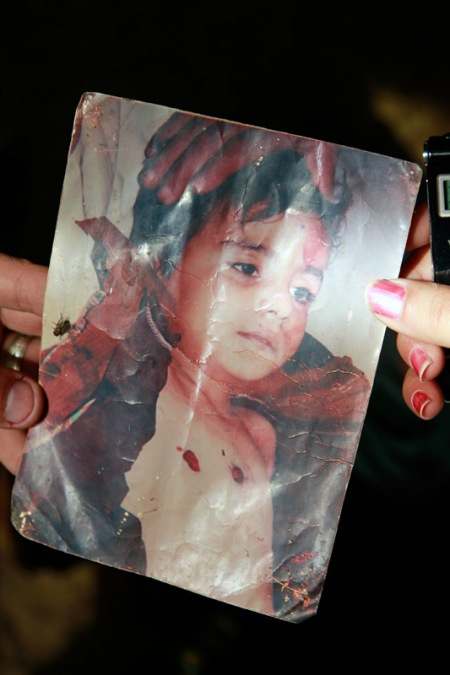
Little Ahmed, shot twice in the chest, died after days without medical care as the Israeli's would not allow it.
Today my team heard from mothers and fathers and children the story of the hell on Earth created by Operation Cast Lead. Forty-eight people were killed in this family, children shot in front of parents, parents shot in front of children, a group of 97 in one home blasted to bits by rockets and mortars. Made to live amongst the mutilated and dead for several days, ambulances were kept away and some died slowly over hours and even days.
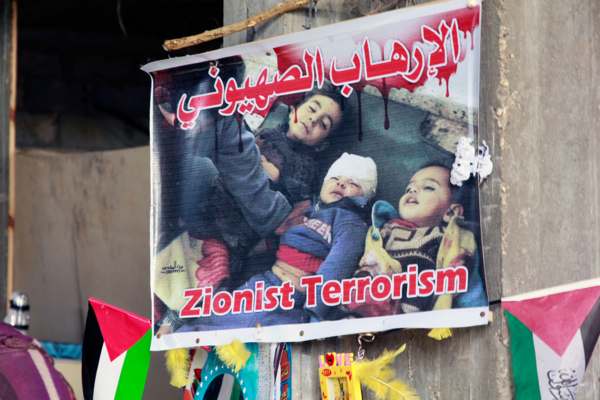
Samouni family children murdered by Israel.
If you knew the details of this story you would conclude as one mother did, those soldiers that committed these acts, could not be considered human. These were demons with the latest high-tech weapons, courtesy of the US tax-payer and if the good people of the US knew what was done in their name here, they would be sick to their stomachs. Shame on all of us for allowing this to happen and to go completely unpunished.
But amidst all the horrifying memories the children still have their moments of childhood, even if they quiver with terror in the night as the Israeli jets fly overhead as they do to this day nearly every night. I love these people, we are all touched beyond words by the experience of being with them, I wish we could take the whole world on a date with this most incredible family.
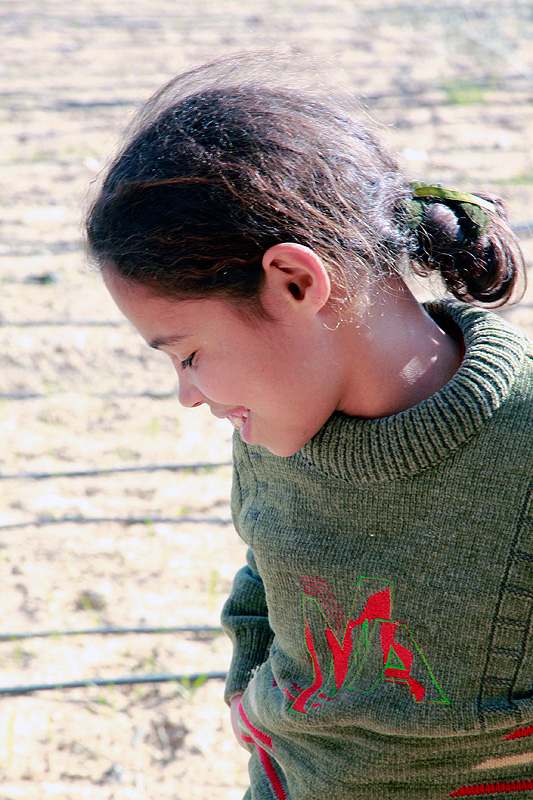
Amal
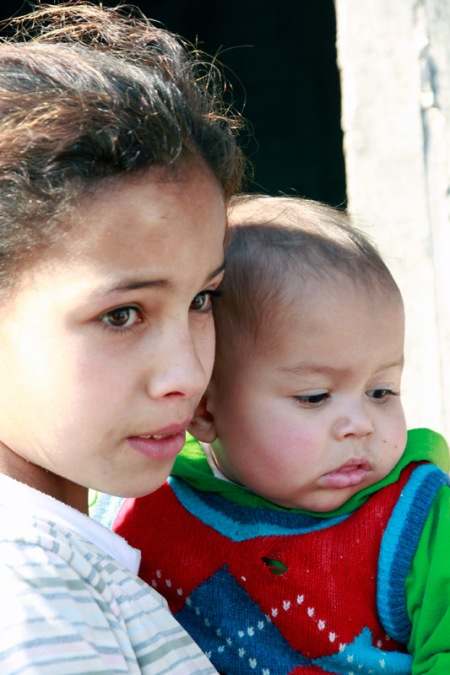
Sazaan & Fares
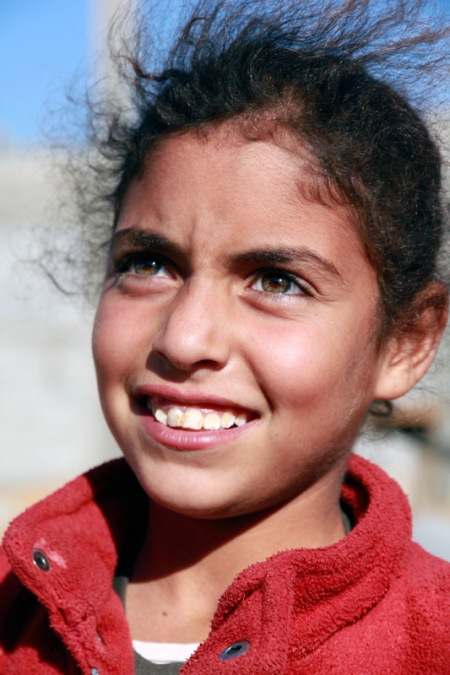
Noorhan
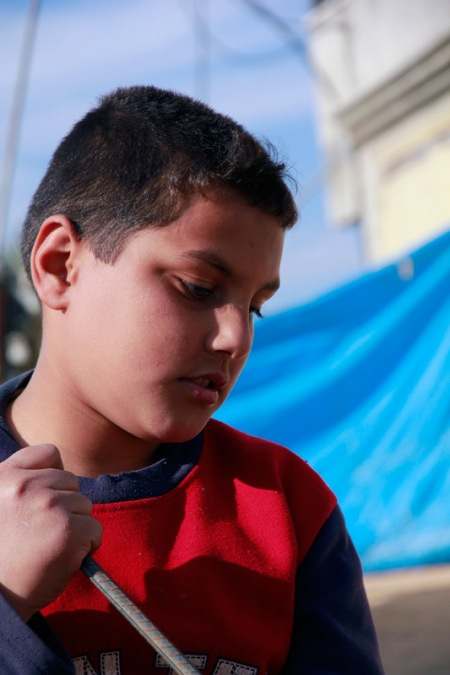
Shaaban
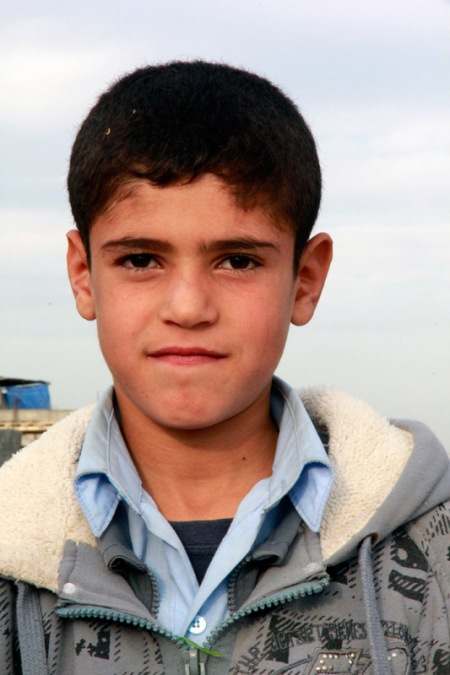
Suhaib
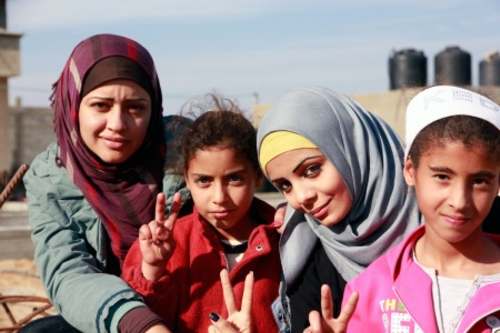
Mushira, Noorhan, Noor & Amal.

Abd-Allah
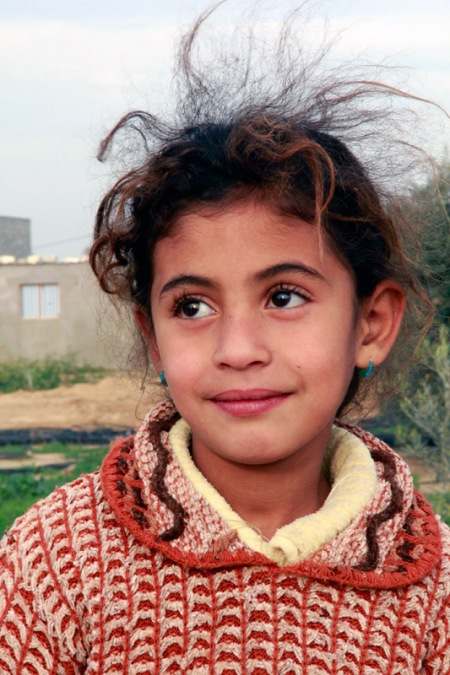
Reem
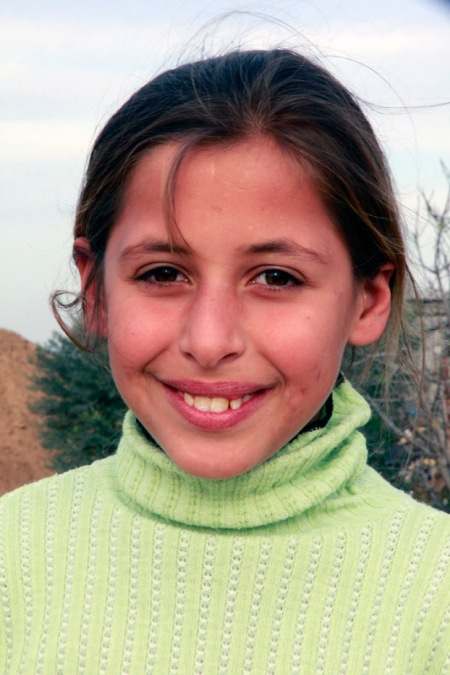
Nisma
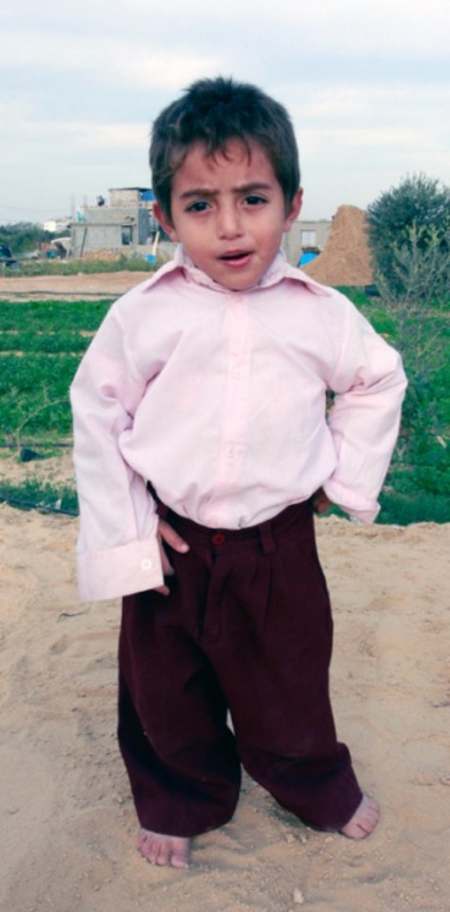
Hamid
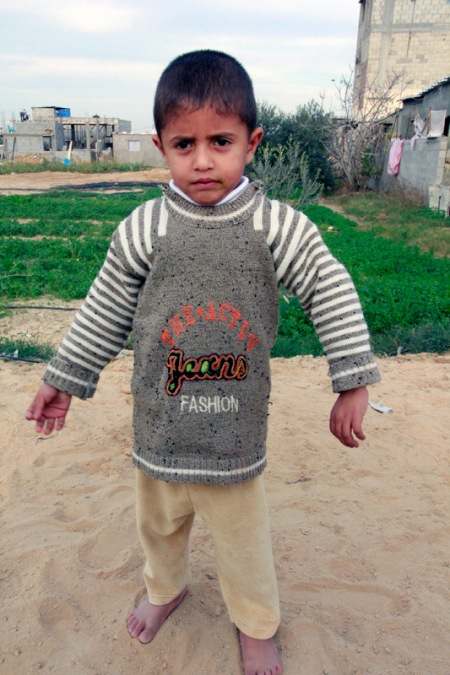
Mohammed
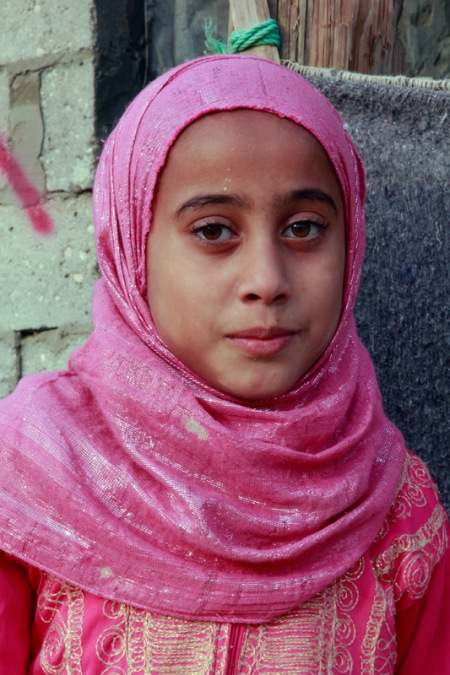
Karima
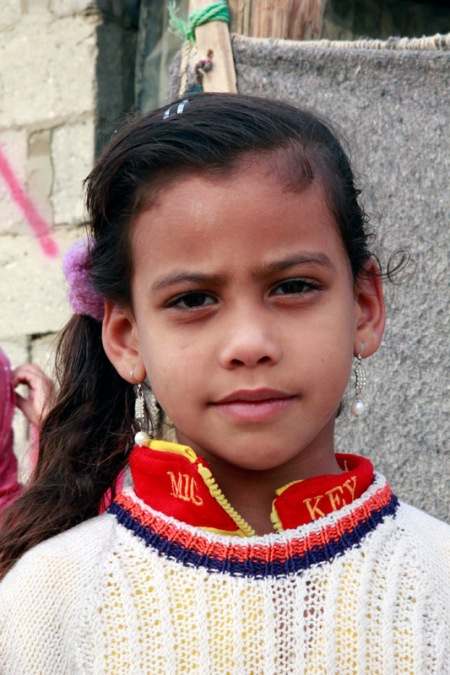
Duaa
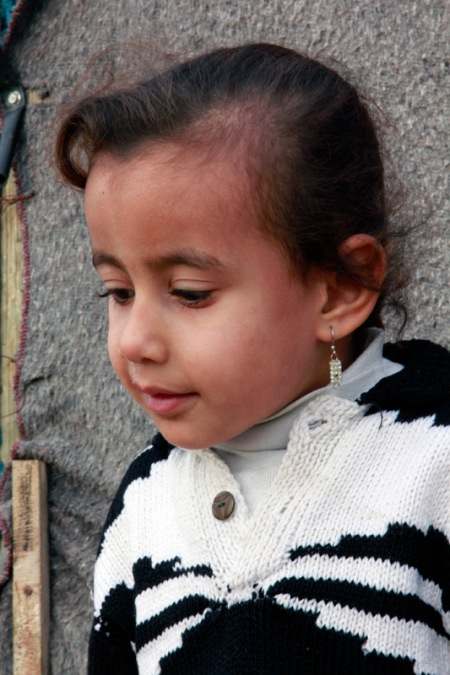
Nedaa
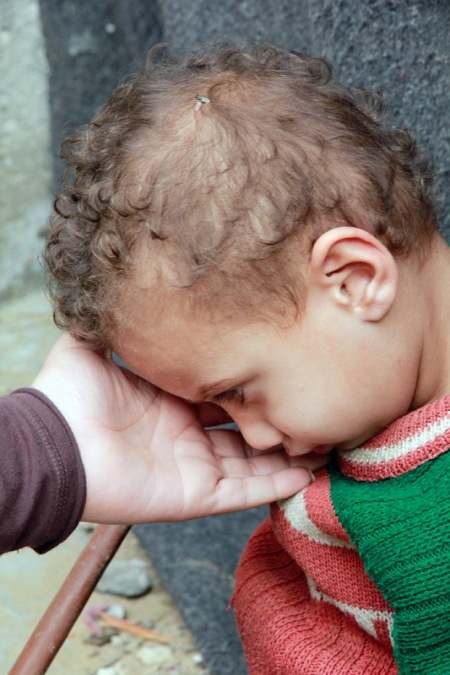
Jubril
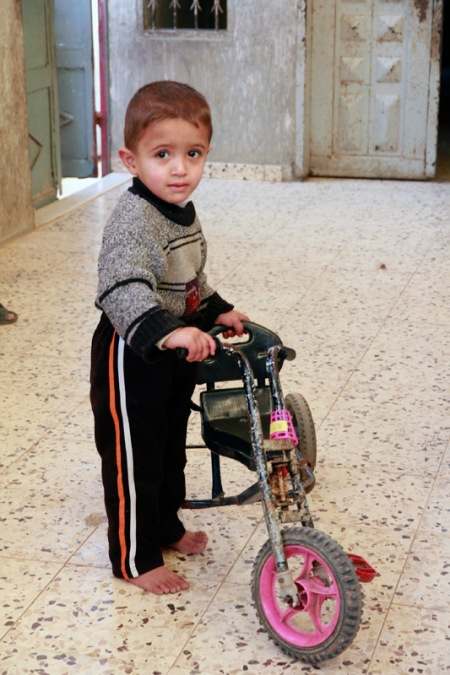
Anas
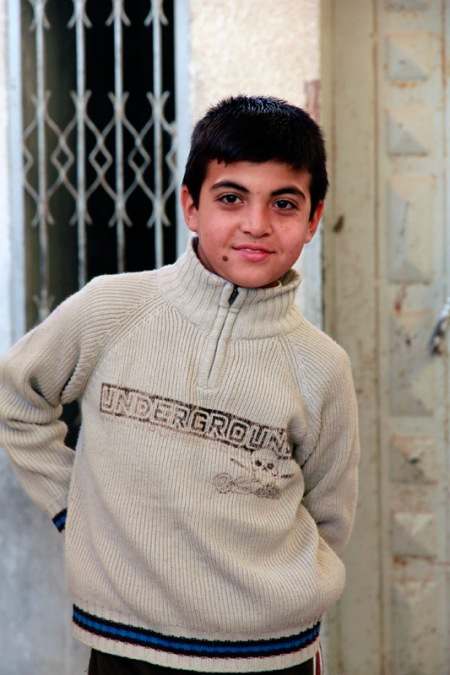
Luaay
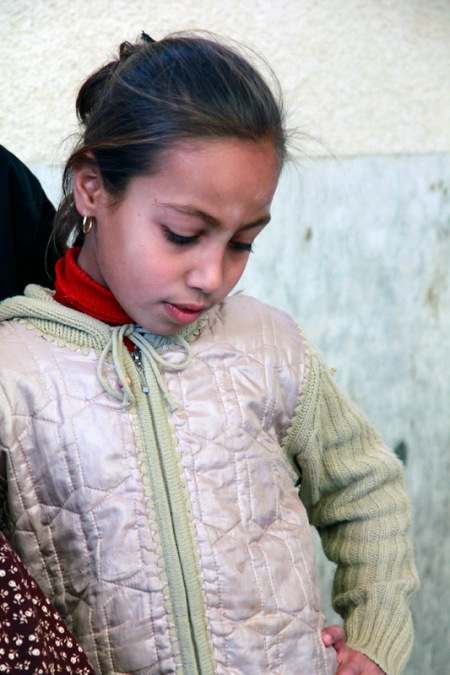
Saidah
The Samouni family children
Mohammed Omer: Operation Cast Lead Is Over, But the Nightmare Continues
Abdullah (in red shirt) and his little brother (r) play “Arabs and Israelis” with their friends in the southern Gaza Strip town of Rafah. (Photo M. Omer)
The Sept. 6, 2010 issue of the leading German newspaper Der Spiegel included the article "Studies Show Nurture at Least as Important as Nature" by Joerge Blech on the findings of a groundbreaking study on intelligence. Researchers found that prolonged poverty, stress and other environmental factors—including war and the deprivation of basic needs—directly affect a child's intelligence and, therefore, his or her life prospects.
Previously it was believed that intelligence was 80 percent genetic. These latest findings, however, show that at least 50 percent of an individual's intelligence is actually determined by environmental factors. More specifically: the more stress, the more arrested mental development. As one of the researchers, Richard Nisbett, a psychologist at the University of Michigan in Ann Arbor, noted: "During World War II, some children in Holland started school late because of the Nazi occupation—with momentous consequences. The average IQ for these children was seven points lower than for children who came of school age after the siege."
The Nazi persecution and World War II in Europe, which lasted from 1933 to 1945, affected an entire generation of children. By contrast, Israel's dispossession and occupation of Palestine has lasted some six decades—and counting. Generations of Palestinian children have been affected physically, psychologically and materially. Since Ariel Sharon instigated the al-Aqsa intifada in late 2000, Israeli repression has been most restrictive, and most steadily escalated, in Gaza. According to "Gaza Strip: A Humanitarian Implosion," a 16-page BBC report released in March 2008: "In September 2007, an UNRWA survey in the Gaza Strip revealed that there was a nearly 80 percent failure rate in schools grades four to nine, with up to 90 percent failure rates in Mathematics. In January 2008, UNICEF reported that schools in Gaza had been cancelling classes that were high on energy consumption, such as IT, science labs and extra curricular activities."
The report adds that "The number of people living in absolute poverty in Gaza has increased sharply. Today, 80 percent of families in Gaza currently rely on humanitarian aid, compared to 63 percent in 2006. This decline exposes unprecedented levels of poverty and the inability of a large majority of the population to afford basic food."War, poverty, stress caused by financial and personal insecurity due to living under occupation, the constant scarcity of basic necessities including food, sewer treatment, water and medical care, the threat of constant attack by military forces, forced imprisonment, lack of movement, lack of rights—these are the daily realities of children in Gaza, realities they, their parents and their grandparents have known their whole lives.
This is the recurring nightmare that is Gaza.A Child's Life
At first glance, 13-year-old Khalil seems like your average teenager. His young body is just beginning to mature, and he is curious, easily distracted and slightly mischievous. A closer inspection, however, reveals a vacant look in his eyes more associated with age. In fact, if one saw only his eyes, one would guess Khalil is close to 50, not 13. What's missing is that sense of invincibility and heightened optimism common among youth his age elsewhere in the world. Where American and European children talk about the latest rap band, their school vacation or their latest crush, Khalil simply shrugs apathetically.
"Excuse me, but the war has wiped blank all my beautiful memories," he says somewhat sarcastically. "The front half of my house was damaged, so that I am transferred to a life-situation that I never dreamed I would be experiencing. After years of living in a large house," he explains, "I now live at Al Zahra city."
Khalil's home was destroyed in January 2009, during Israel's "Operation Cast Lead" assault, plunging his middle-class family into homelessness in an instant. Unlike in a natural disaster, insurance funds and global assistance were not available. His situation was man-made—and Khalil is far from alone.
Still traumatized, he remembers a friend of his being blown to pieces when an Israeli missile struck his neighborhood.Understandably, these are things he would rather forget—but can't. Because of Israel's siege, few resources are available to help him cope with his trauma and move on with his life.
The children's stories are difficult to hear, of course. But as any parent knows, the pain of their children is felt two-fold by those responsible for care giving. Love, after all, can go only so far.A Parent's Frustration
Abu Abdullah of Rafah expresses the pain of most parents in Gaza: the inability to protect his children. His wife frets because she cannot comfort them. The younger children, aged 10, 7 and 4, wet their beds and she feels helpless to quell their fears. "It's like a cancer you can't control or stop," Umm Abdullah says.
Nodding, Abu Abdullah sits on the stoop of his house watching his children play "Arabs and Israelis," the occupied territory's version of "Cowboys and Indians" or "Cops and Robbers." In the role of a soldier, his oldest son, Abdullah, aims a plastic Chinese toy gun at his brother's head. "I am going to kill you right now," the teenager says.The game is popular among children who've had few outlets to channel their emotions since Operation Cast Lead. Abu Abdullah would rather they play soccer, but this game reflects the reality of their lives and gives his children some sense of control.
Even when he's awake Abu Abdullah's 12-year-old son suffers from nightmares about Israeli F-16s bombing his neighborhood. In his dreams, all the children are running away from home or school. Some of his friends are injured, others dead, and ambulance sirens scream incessantly in his head. But it's more than a dream: it's what he actually witnessed, and it replays in his mind ad nauseam, rarely giving him peace.
Nor are Abdullah's fears imaginary. When his mother sent him to buy lentils from the nearby grocery store less than three minutes away, the boy returned home with no lentils and his pants soaked in urine. Asked about the lentils, Abdullah began crying and told his mother in a voice quaking with fear that "the drones are bombing."Teachers who work with at risk students in inner-city neighborhoods around the world can attest to the effect poverty, violence, guns and fear have on the children forced by circumstance to live in these situations. Gaza is the inner city on steroids. Its children deal not only with gangs in the form of resistance, but they also must endure the assaults—usually in the middle of the night—of the world's fourth most powerful military. The effects on the children are predictable: Fights and violent behavior, in schools and on the streets, have escalated in frequency and intensity, according to psychologists who visit Gaza's schools.
Psychologist Zahia Al Qarra with the Gaza Community Mental Health Program (GCMHP) says that 79.9 percent of the children she sees feel they are in a big prison. Another 79.3 percent say that they cannot afford to buy what they need or want.According to a recent GCMHP study, 20 percent of Gaza's children suffer from Post Traumatic Stress Disorder [PTSD], and another 13 percent are diagnosed with depression. In Gaza's UNRWA-run schools, where literacy and academic standards are usually high, 9,000 primary students failed their school work and exams last academic year.
Another GCMHP psychiatrist confirms that cases of disease, behavioral problems and psychological traumas have multiplied among Gaza's children, citing increases in autistic behavior, bedwetting, thumb-sucking, nail biting, anger, slow-motion flashbacks, reliving war scenes in familiar neighborhoods, fear of the dark, agoraphobia, panic at the sound of planes overhead, and disinterest in taking part in social and group activities—all symptoms of PTSD and depression.
"It's not just the children" says Abu Diaa, a father of seven. "It's also we adults who need psychological counseling."Like most parents in Gaza, Abu Diaa, whose only income is a disability pension from a 2003 injury, worries constantly about finding food and clothing for his children.
"It is two different types of traumas," Abu Diaa explains, "living in fear of attacks and worrying about not having a job to protect one's family."Psychiatrists and general practitioners in Gaza observe that parents often do not realize the extent to which their children are traumatized. Many are trying to deal with their own pain and stress and often neglect or delay their own treatment. Add to this the stigma about seeking psychological treatment for themselves or their children. Palestinian and Arab society does not embrace victimhood, and seeking help is often equated with admitting one is powerless and therefore a victim. GCMHP director Dr. Ahmed Abu Tawahinah notes that when a patient visits a doctor, he "never says I am depressed or I have PTSD." Rather he'll say something like, "I have a headache."
A Society Under Stress
The physical and psychological effects of Gaza's plight are pervasive. According to the GCMHP's Al Qarra, divorces have increased, often due to poverty. When parents are unable to fully care for their children due to their own trauma, she adds, increasing numbers of children are forced to leave home or run away. They find themselves on the streets, digging through garbage containers for a few things to sell to make a bit of money or eat. Incidents of sexual abuse, previously unheard of in Gaza, also are being reported.This past September, 20 months after Israel's war on Gaza, Dr. Jamil Al Tahrawi, a university lecturer in social psychology, decided to analyze the art work of children in Gaza to try and assess the depth of their psychological trauma. He asked 455 children to draw whatever they wanted. More than 82.3 percent drew images directly related to Israeli attacks on Gaza. Some of these drawings show Palestinian resistance fighters, Israeli soldiers, tanks, bulldozers, ambulances, helicopters, F-16s, and pilotless Israeli drones.
The children mainly used light colors in their drawings, avoiding dark colors as if they were afraid of them. Dr. Al Tahrawi and other doctors in Gaza saw a clear indication in the drawings of trauma following war crimes similar to those mentioned in Judge Richard Goldstone's report for the U.N. Human Rights Council. Indeed, Dr. Al Tawahiha confides, all 1.6 million residents of Gaza are traumatized to some extent—"including myself."
As Israel continues its attacks on Gaza, the nightmare continues for Abdullah and all residents of Gaza.Nearly two years after Operation Cast Lead, Abdullah still is afraid to sleep, afraid to play and afraid to walk to school in the daytime, even with his father by his side. One can only guess at the long-term physical, emotional and intellectual effects Israel's continued occupation and siege will have on his life and millions of other Palestinians. One thing is certain, however: It is affecting everyone.
Award-winning journalist Mohammed Omer reports on the Gaza Strip, and maintains the Web site www.rafahtoday.org. He can be reached at <gazanews@yahoo.com>.?


