| THE HANDSTAND | FEB.MARCH2011 |
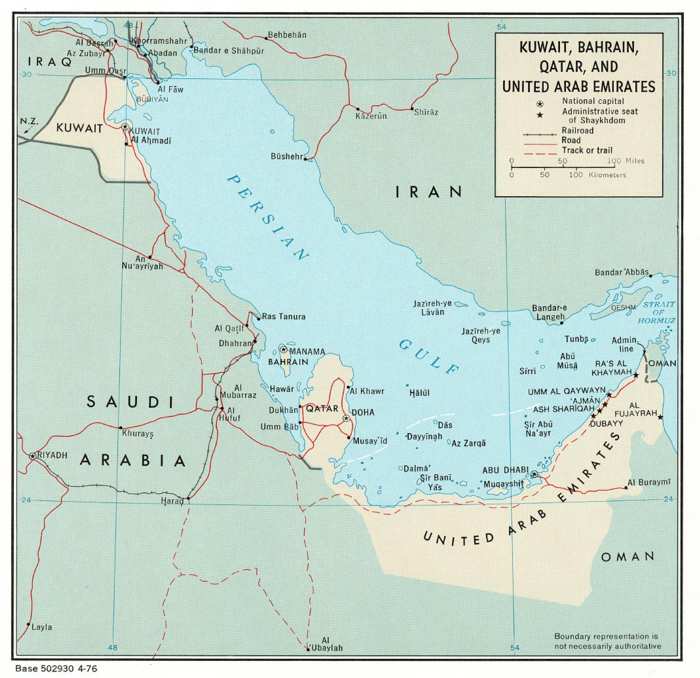
bahrain
UPDATE:
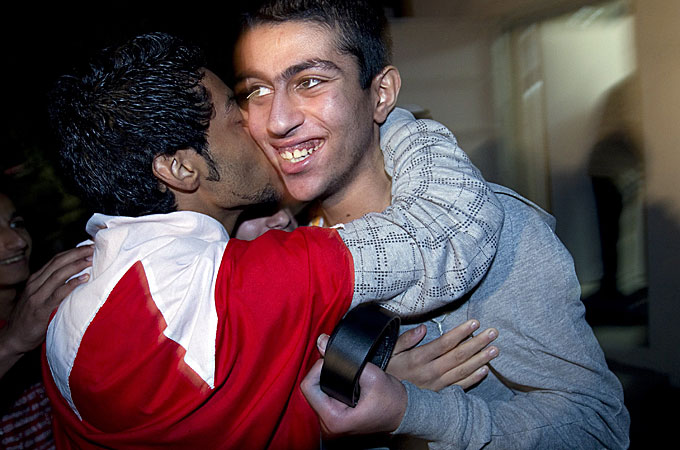
23 Feb 2011Bahrain frees political prisoners
At least 50 people released, including 23 Shia activists accused of a coup plot, in response to protesters' demands.
At least 50 political prisoners have been released in Bahrain, including 23 Shia activists accused of plotting to overthrow the kingdom's al-Khalifa dynasty. The state also pardoned two others abroad, including opposition leader Hassan Mashaima, an MP told the AFP news agency.
The move late on Tuesday comes after state media reported that King Hamad bin Isa al-Khalifa had ordered the release of prisoners, a demand of protesters seeking an elected government in the country. Ibrahim Mattar of the Shia Wefaq party told the Reuters news agency it was a "positive move" but that dozens still remain in jail. "Allowing the people to protest and releasing those people are positive moves," he said.
But Mohammed al-Tajir, a human rights lawyer representing some of the detainees, said he was not sure that the release of prisoners would be enough to satisfy protesters."We are not sure even about the number of the released detainees. We are expecting that more than 600 defendants were in jail and only some of these have been released since last night, including the 23 Shia activists," he told Al Jazeera He said up to 200 may have been released since Tuesday night, and that those freed were political prisoners or "clerics who are normally active in political or human rights issues". Shias account for about 70 per cent of the population, but are a minority in Bahrain's 40-seat parliament.
The United States on Tuesday welcomed the state's announcement that it would begin releasing prisoners and permit peaceful demonstrations. "We commend the steps taken by King Hamad as well as Crown Prince Salman and others to restore calm to Bahrain, to allow peaceful demonstrations to take place," PJ Crowley, the state department spokesman, said. Hillary Clinton, the US Secretary of State, added that the "steps need to be followed by concrete actions and reform". "There is no place for violence against peaceful protesters."
But opposition groups are still waiting for the al-Khalifa family, which has ruled Bahrain for 200 years, to accept the principle of a constitutional monarchy before agreeing to enter into dialogue.
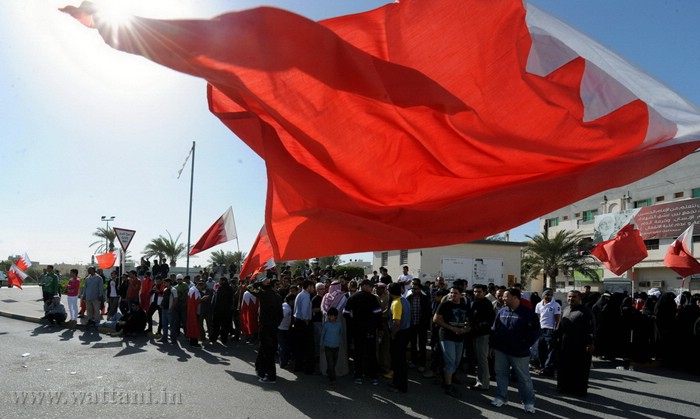
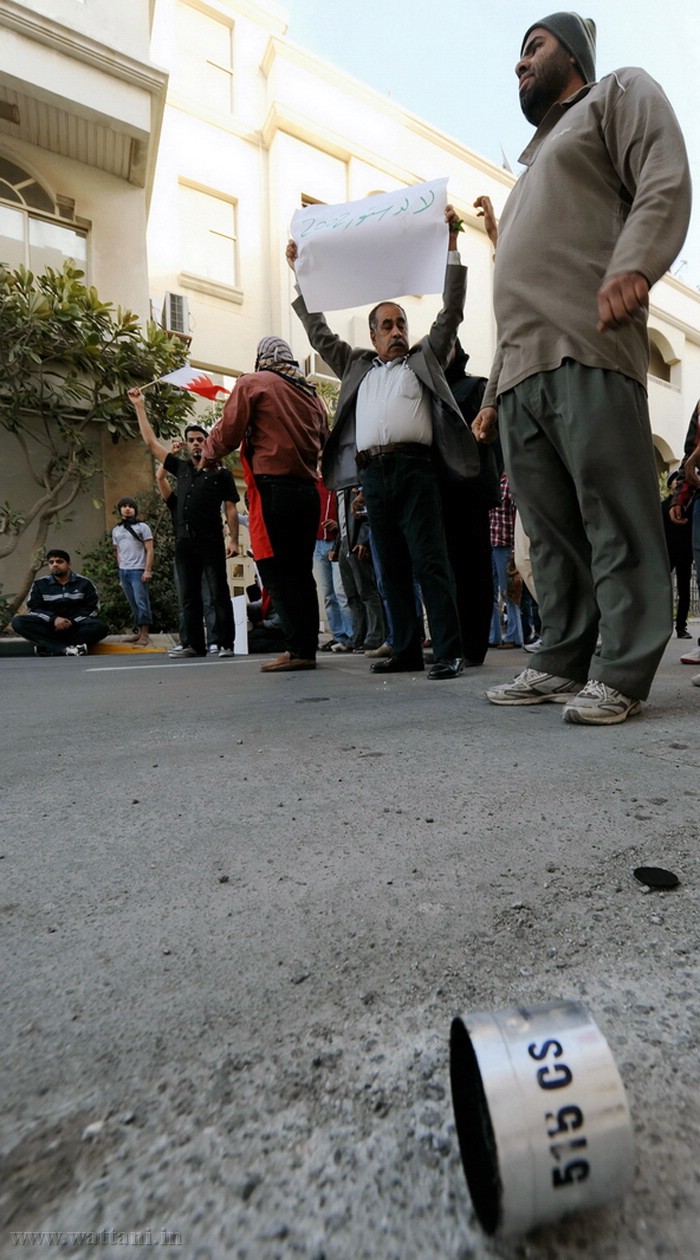
"The main point we are waiting for is the initiative for political reform. Until now they didn't promise anything," Mattar said. "If they don't say it, we are wasting our time." Earlier on Tuesday, tens of thousands of people descended upon Pearl Roundabout in Manama, the capital, calling for the government's downfall, in the biggest rally in more than a week of protests.
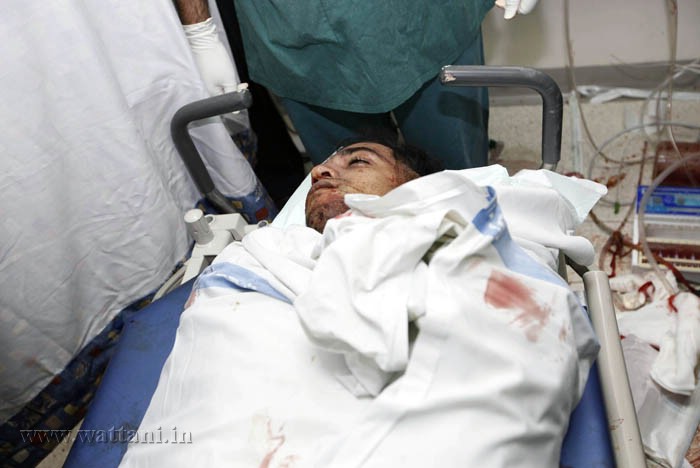
A total of seven people have been killed and hundreds wounded in the country's worst unrest since the 1990s.Source: Al Jazeera and agencies
Eighteen members of Bahrain parliament have resigned from their posts in a show of protest against the violent crackdown against pro-democracy demonstrators in the Persian Gulf kingdom.
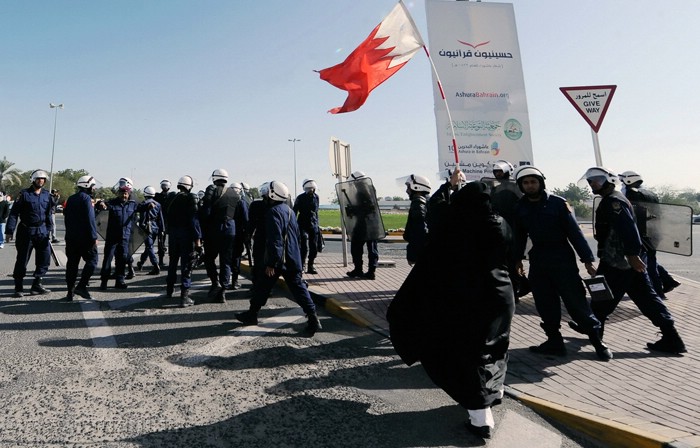
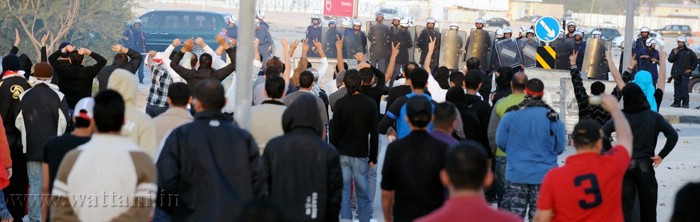
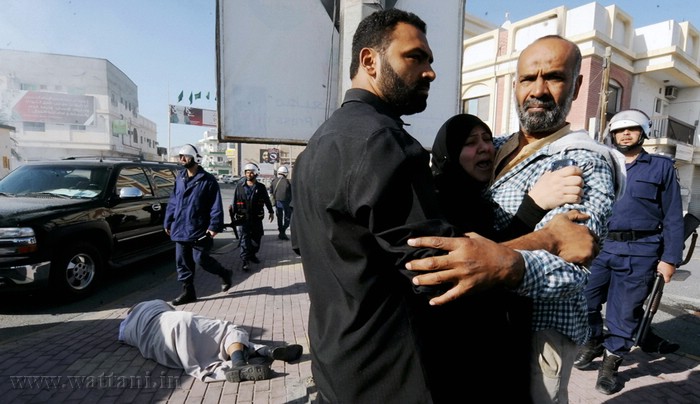
The lawmakers announced on Thursday that they have suspended their membership in parliament over the killings of Shia demonstrators, Press TV cited an unnamed opposition parliamentarian as saying. According to Bahraini health ministry, three people were killed and 195 injured when police launched a crackdown against protesters in capital Manama on Thursday.
Armored vehicles rumbled through the capital on Thursday as the government tried to quell the protests inspired by the revolutions in Tunisia and Egypt. Bahrain's army has said it will take all necessary measures to ensure security and called on people to avoid going to central areas of Manama.
The US Department of Defense says Washington is closely monitoring the developments in Bahrain, which is the headquarters of the US Navy's Fifth Fleet and holds some 4,200 US service members.
The magnitude of the pro-democracy protests in Bahrain is unprecedented in the history of the Persian Gulf kingdom and the authorities' efforts to quell them have so far been ineffective.
The demonstrators are demanding a new constitution that would move the country toward democracy and limit the king's powers. Bahrain is ruled by a royal family, who are blamed for discrimination against the country's Shia population -- comprising 70 percent of the population.
Protesters have also called on the Bahraini king to fire his uncle, Khalifa bin Salman al-Khalifa, who has been the country's prime minister since 1971.
MP/AKM http://www.presstv.com/detail/165732.html
WATCH THIS VIDEO:
http://www.youtube.com/watch?v=R3LazFJ0wa4
Bahrain is undergoing a silent revolt by pro-democracy protesters despite a violent crackdown backed by the US and Saudi Arabia, a political analyst says.
“Bahrain has been simmering under a veil of anger and contempt for the ruling Al Khalifa who have stolen the country of Bahrain, its future, its wealth and its freedom,” Ali al-Ahmed, the director of Institute for (Persian) Gulf Affairs (IGA) said in an interview with Press TV. The IGA official was referring to the kingdom's royal family headed by King Hamad Bin Isa Al Khalifa. Ahmed said Bahrain was “one of the most corrupt oppressive regimes in the Persian Gulf so it is a strong candidate for revolution.”
Bahrain, which has long been the scene of anti-government protests, has been seriously shaken by the shockwaves of the revolutions in Egypt and Tunisia and protests against Western-backed governments in Arab and North African nations. But unlike the rulers in Egypt and Jordan, Manama has declined reforms to appease protesters and has instead resorted to violence against demonstrators.
“The government of Bahrain is supported by other countries such as the US, which gives aid,” Ahmed said. “And there is a huge naval base in Bahrain that was given by the ruling family there and this is one of the reasons that the American government has been supporting clearly the monarchy in Bahrain,” he added.
He went on to say that Saudi Arabia also plays a role by supporting the monarchy in Bahrain, fearing similar uprisings by its own population and pro-democracy protesters in other Arab countries. “The Bahraini government itself is weak. If it was not supported by the US and the Saudi monarchy, it would not take it but a few days to flee,” he concluded.
MRS/PKH/AKM http://www.presstv.com/detail/165390.html